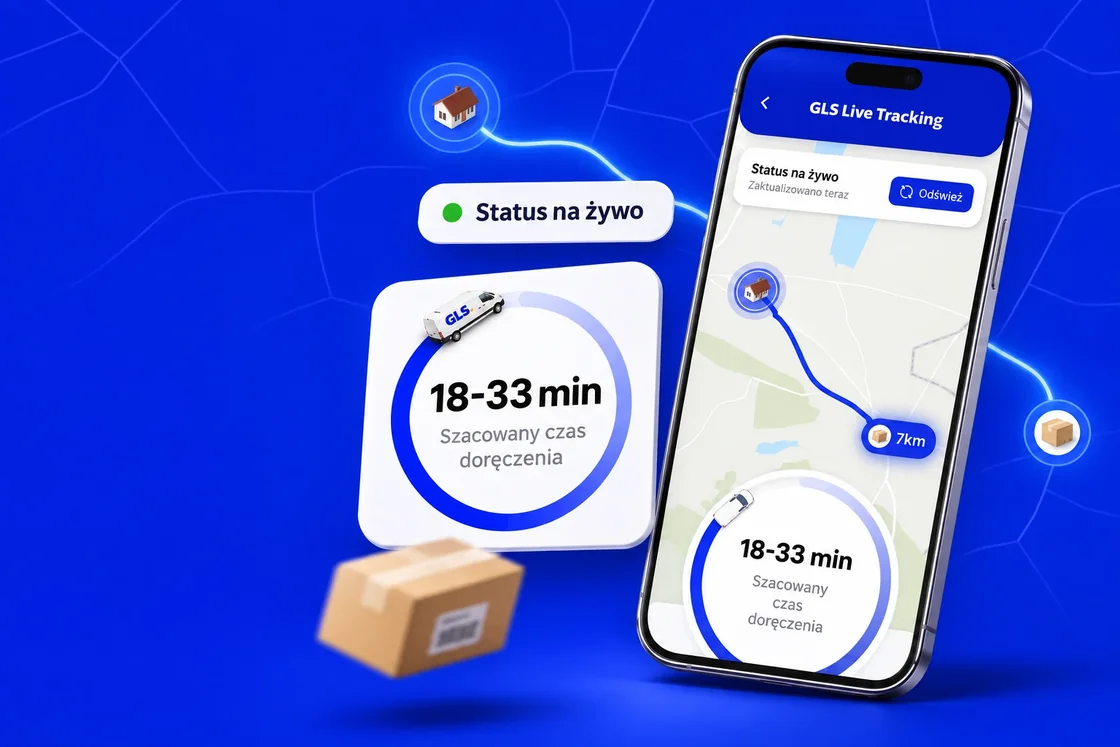
I built GLS Poland’s first AI Sales Hub, and it didn’t hold up. When I went back to the sales reps, five of the eight I interviewed had corrected a wrong AI answer with a customer. I rebuilt the tool in three months, from design to code, so every finding shows its source and how sure it is.
My role
Designer and builder
Year
2026
Client
GLS Poland
Via
inn.way
≈100
sales reps use it
15–30 → ≈5 min
per lead, reps’ estimates
10–15 s
to the first answer on a lead
01 Context
My first versiondidn’t hold up
GLS Poland’s sales reps win e-commerce customers by calling online shops, and each call starts with research. I built them a tool for it twice: a first version that didn’t hold up, and the rebuild they use today.
v1 · March 2026
Where the first version fell short
I built the first version as GLS’s AI Product Builder, and it was presented at the GLS sales conference in April 2026. Each of its three tools hit a barrier.
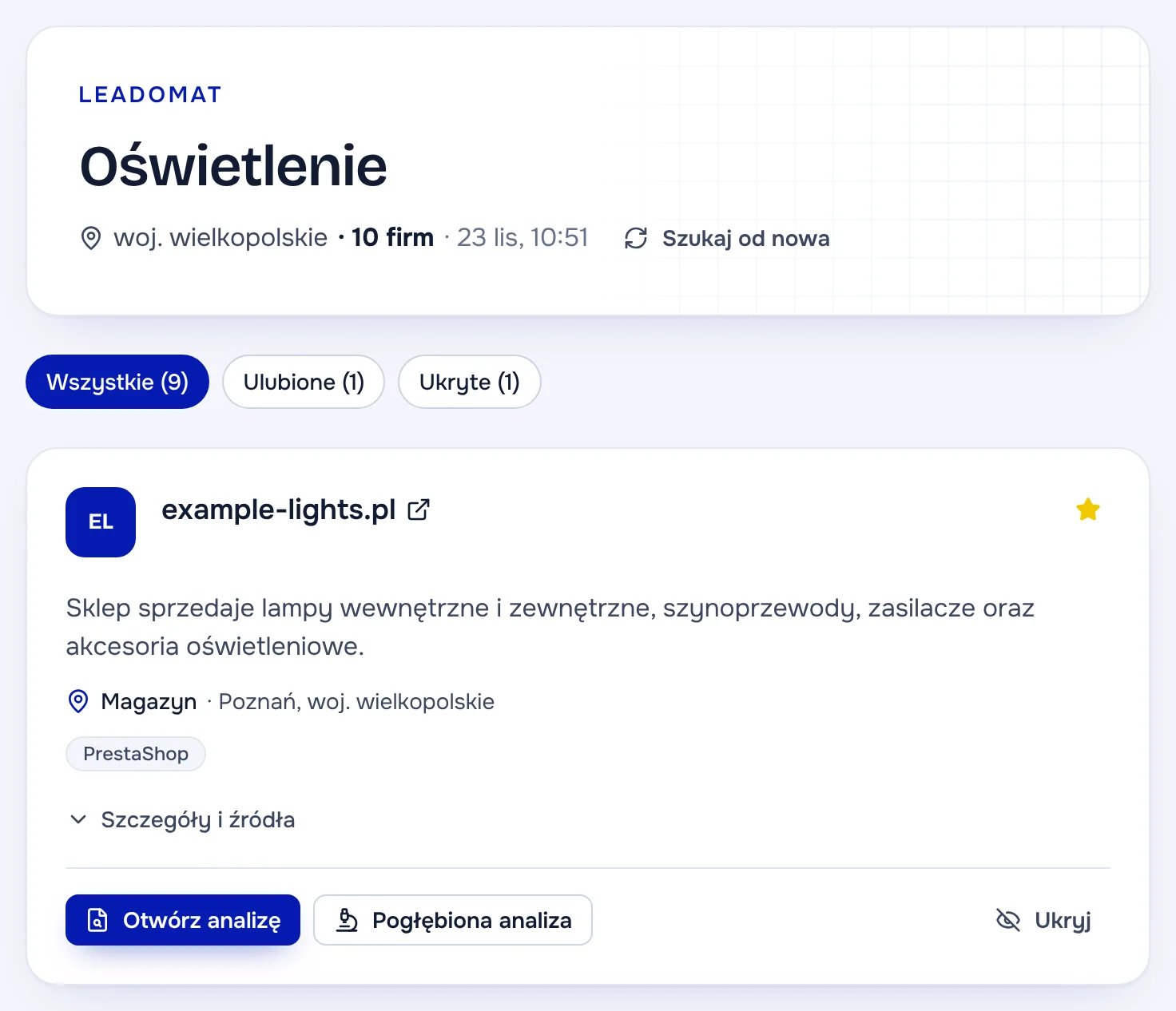
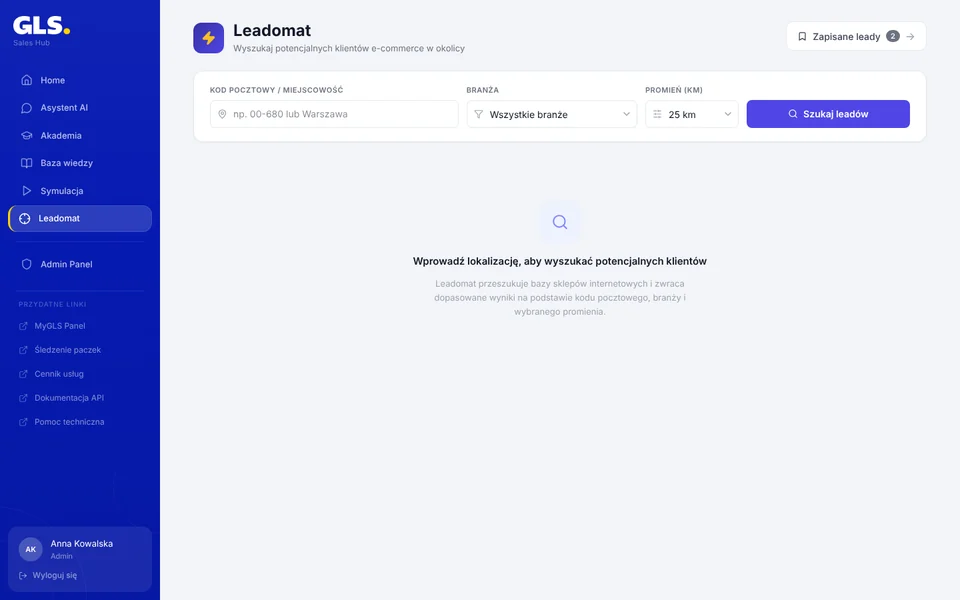
Lead finderListed a shop’s website, contacts and products, but the data wasn’t reliable enough for outreach.
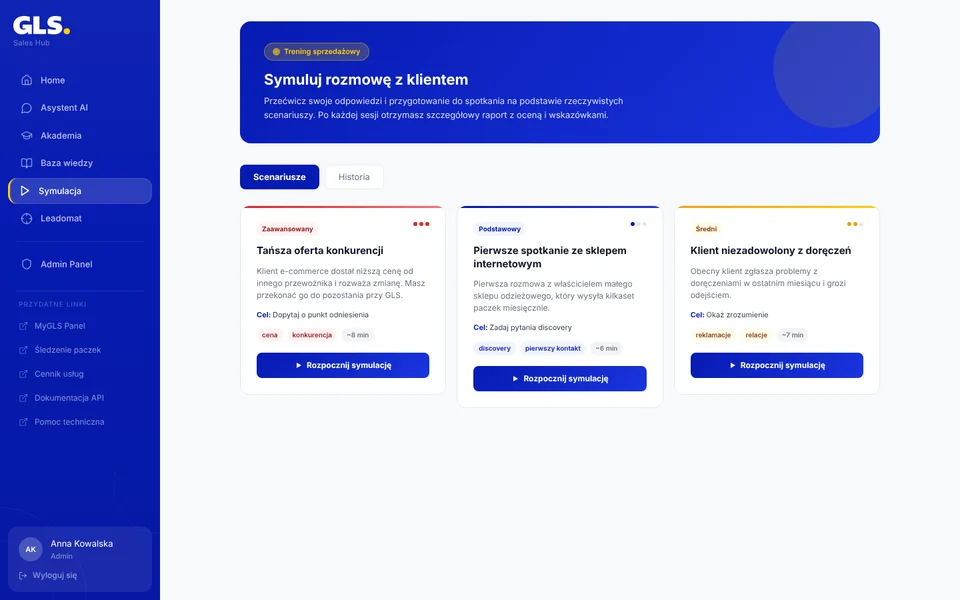
Practice callsReps rehearsed in invented scenarios that felt unlike their real calls.
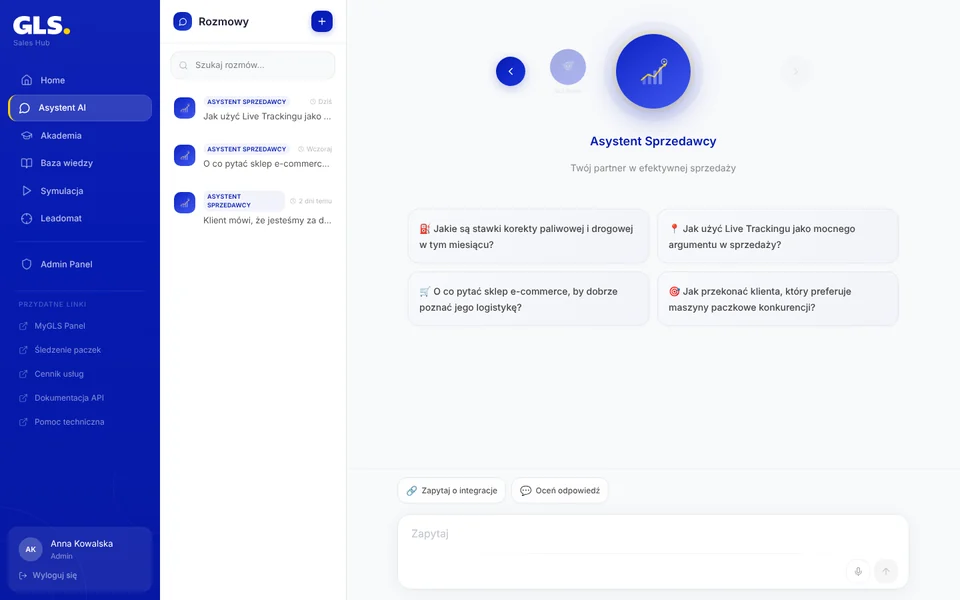
AI assistantReps used Microsoft Copilot instead.
Lead finder
Practice calls
AI assistant
Version 1, with its built-in sample data.
Rebuild · Sep–Nov 2026
One brief per lead, with its sources
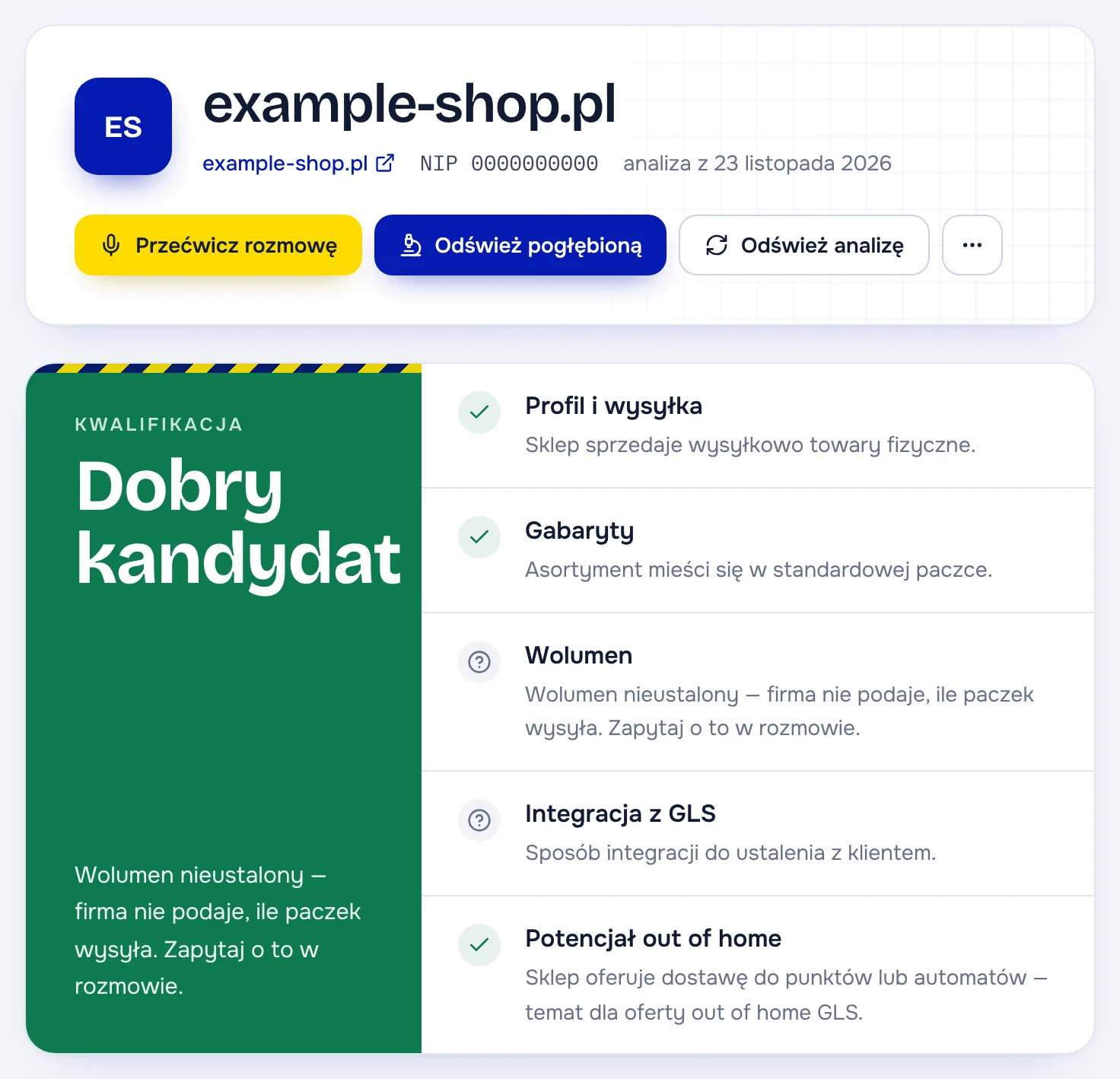
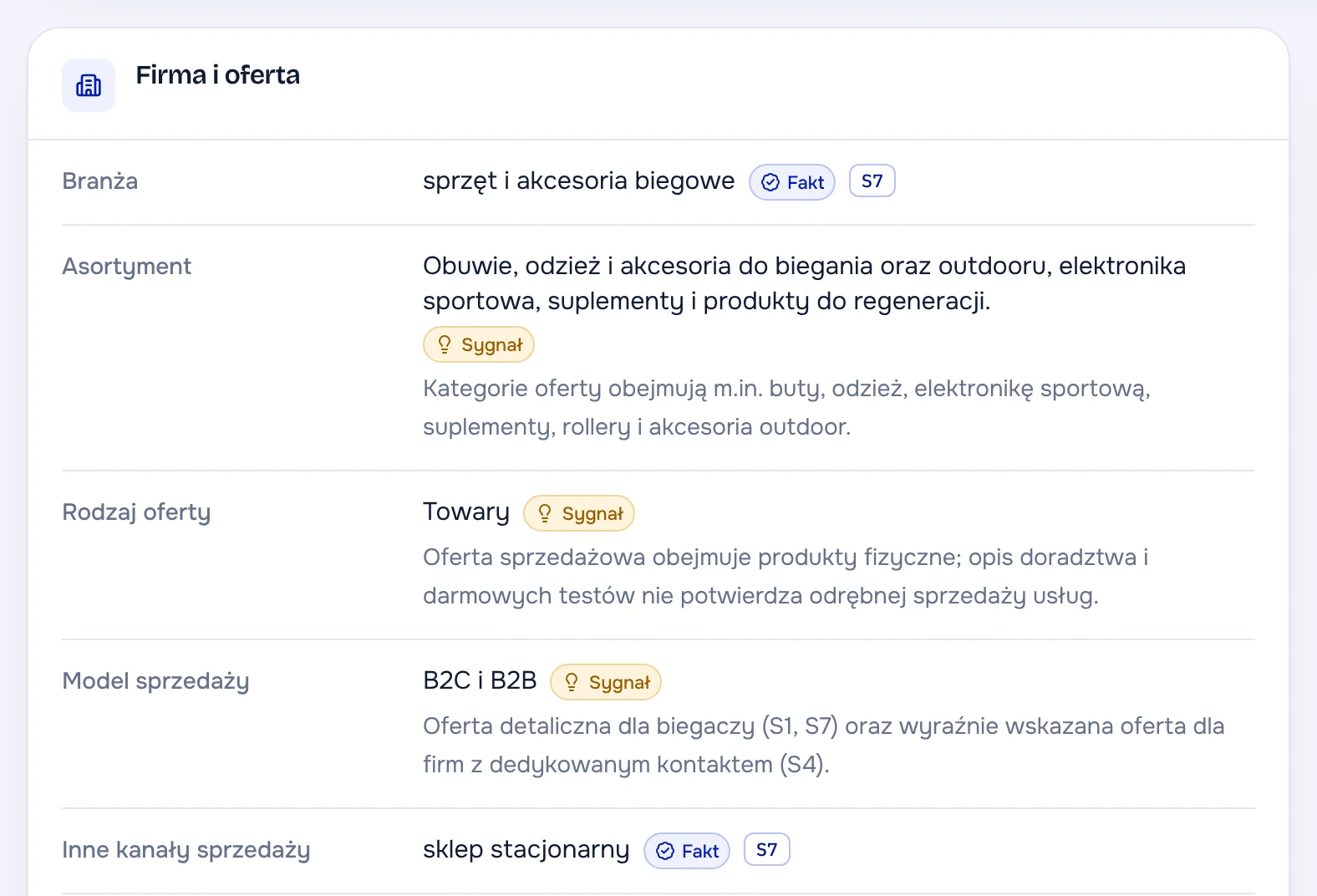
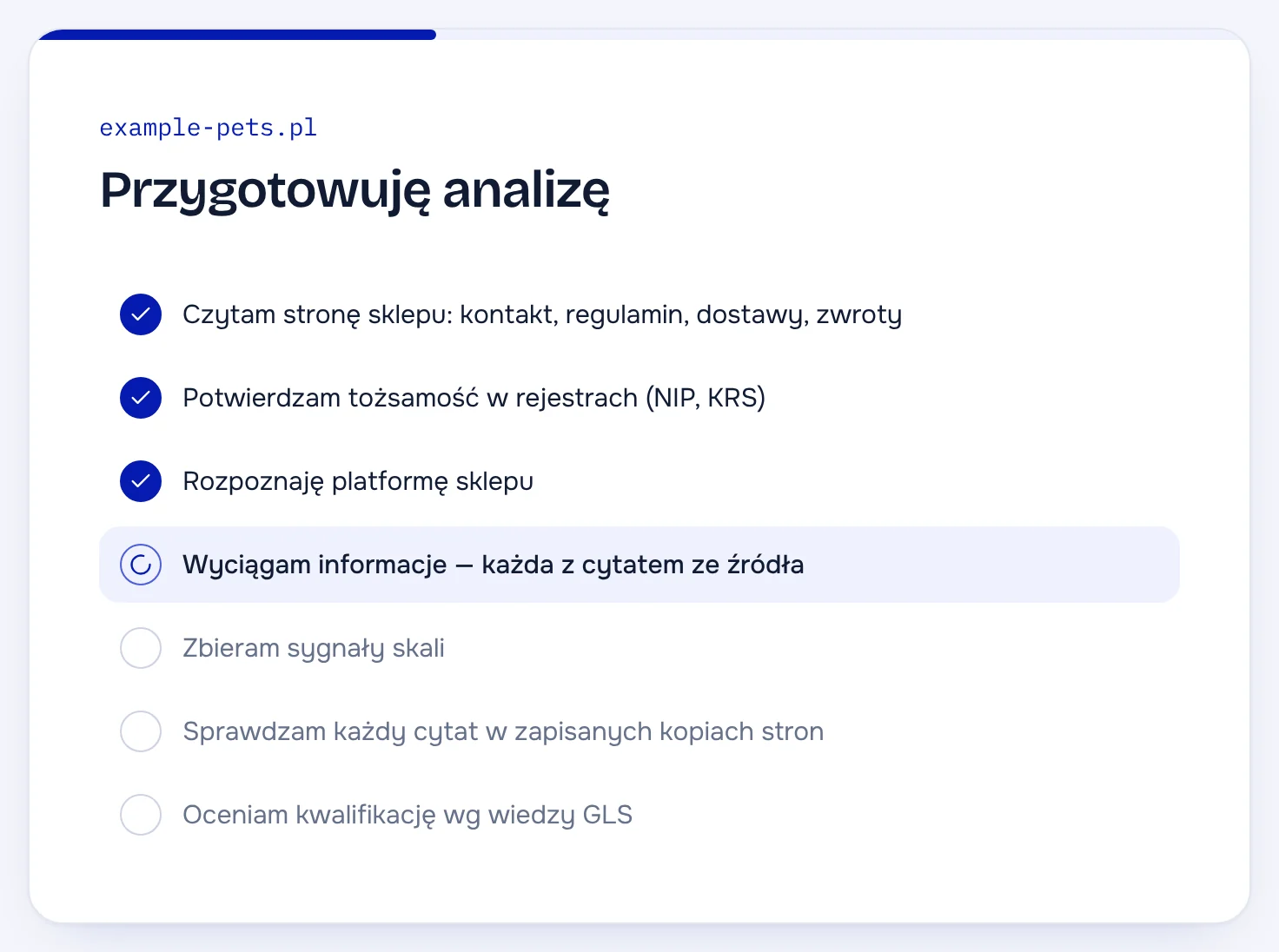
In September 2026 I started the rebuild with a fresh discovery. Each lead now gets a brief: what the tool found about the shop, each finding with its source and an evidence label, and the open questions for the call. I rebuilt the lead finder and the practice calls around the same sources.
The brief in the app. The shop and its details are fictional.
Before each call
Four questions decide whether a shop is worth a call.
1What does the shop sell?
2Where does it ship from?
3Which carriers does it offer?
4Can GLS integrate with its platform?
6–8 h
a week on lead research, per rep
Reps’ own estimate, from the interviews in September 2026.
One number led: volume
GLS wins e-commerce customers call by call. A rep who knows in minutes whether a shop fits, and can defend every answer, makes more calls that count.
The number this case is about
Volume
More shops and shoppers choose GLS at checkout. Here: better-prepared calls to the shops that fit.
Not here
Cost per parcel
More parcels go to a locker or pickup point instead of the door, and fewer recipients call the helpline.
Not here
Revenue per parcel
People pay for services in the app, such as sending a parcel.
Limits the tool had to respect
Fit how reps already prepare.
Reps prepare between calls, next to their admin work, so the tool had to save time from the first lead.
Public sources only.
The tool reads shop websites, which change and sometimes block automated access.
Reps trust AI differently.
Some reps use AI every day, others avoid it. The same screen has to work for both.
02 Problem
Fast answersreps couldn’t defend
Research by hand was slow. The AI reps tried was fast, and its answers didn’t hold up with customers.
Research by hand was slow
Reps put it at 15–30 minutes per lead, between calls and admin work.
What reps neededAnswers they could repeat to a customer, and to know which ones they couldn’t.
03 Discovery
Starting overwith the reps
In September 2026 I started the rebuild with a session with sales directors, then interviewed 8 sales reps and watched how they prepared for calls.
01
Session
Sales directors · September 2026
Signal
Fit first, and no rules for AI
Shops on platforms GLS integrates with
Products suited to lockers and pickup points
No shared rules for using AI in sales
My readingThe brief shows fit first and gives every rep the same rules for AI answers.
02
Interviews and observation
8 sales reps · September 2026
Fact
Reps checked a shop in the same order, and AI had let them down
example-shop.pl · fictional
Delivery at checkoutCourier ALocker network BPickup point C
Returns: ul. Przykładowa 1, KrakówPowered by WooCommerce
123
A fictional shop, reconstructed: what reps looked at, in the order they looked.
Observation · how reps prepared
The order they checked a shop in
1
Dispatch addressThe first question. Often only a returns address is public, and it may not be the dispatch site.
2
Shop platformIt decides whether GLS can integrate with the shop.
3
Carriers at checkoutReps walked through checkout to see who GLS would compete with.
5 of 8
reps had corrected a wrong AI answer with a customer.
Interviews · September 2026
4 of 8
reps struggled to explain some GLS services.
Interviews · September 2026
My readingThe brief has to give answers a rep can defend with a customer, in the order reps already check a shop.
Hypothesis
If every finding shows its source and how sure it is, reps will use the brief on the call instead of checking it again.
The design goal
A brief a rep can repeat to a customer, with the gaps turned into questions.
04 Decisions
Trust built intoevery answer
Three decisions, each about how sure an answer is and what a rep does with it.
01
Decision 1 of 3
Label the evidence behind each finding
Shipped
ContextSales directors had no shared rules for AI answers, and reps trusted AI differently. Each finding had to say how far a rep could take it.
The questionHow should a finding show how sure it is?
Not chosen · A · A confidence percentage. It says how unsure the model is, and leaves the next step to the rep.
Not chosen · B · Traffic lights. Quick to scan, but they don’t say why.
Chosen · C · Five evidence labels. Fact, Signal, Estimate, No data, Ask the customer, each with an action.
Why I chose itA label tells a rep what to do with a finding. A percentage tells them how unsure the model is and leaves the next step to them.
Trade-off
Five labels take longer to learn than one number.
My role
I defined the labels and the rules behind them, and built them into every finding.
One finding, three ways to show it
A · A confidence percentage
GLS integrationSupported for WooCommerce72%What does a rep do with 72%?
B · Traffic lights
GLS integrationSupported for WooCommerceMediumQuick to scan, but why is it amber?
C · Evidence labels
GLS integrationSupported for WooCommerceSignalMention it, then confirm which plugin they use.
FactSay itA checked quote, its source and the date it was read
SignalMention it, then confirmAn inference with its reasoning and any conflicting evidence
EstimateUse it to prioritiseA range with a method and a confidence level
No dataDon’t guessThe sources checked leave this detail open
Ask the customerAsk itA specific question for the call
Shipped
Above, lo-fi sketches of the options. Below, the shipped screen; the shop is fictional.
02
Decision 2 of 3
A 15-second brief before deeper research
Shipped
ContextEvery lead got the full analysis, which took 2–3 min. In the pilot, reps didn’t need all of it on every lead, and the wait added up.
The questionWhat should a rep see first on a lead?
Not chosen · A · One full analysis for every lead. Everything, after 2–3 min of waiting.
Chosen · B · A basic brief, then research on request. A go or no-go in 10–15 s, deeper research in about 45 seconds when the rep asks.
Why I chose itFor most leads a rep needs a go or no-go. The full analysis is there when a lead is worth it.
Trade-off
Returns and carriers wait for deeper research, about 45 seconds on request.
My role
I split the analysis in two and built both steps.
The first answer, before and after the pilot
Before the pilot
Example ShopFull analysis
Analysing the shop’s website…2:41
Every lead got the full analysis, whether the rep needed it or not.
Every lead, 2–3 min
After · shipped
ESExample Shopexample-shop.pl · fictionalBasic brief · 12 s
PlatformWooCommerceFactSource: the shop’s checkout, read today
GLS integrationSupported for WooCommerceSignalCheck which plugin the shop uses
Dispatch addressNot found on public pagesNo dataOnly a returns address is listed
For the call“Where do you ship your parcels from?”Ask the customer
Research deeper: dispatch, returns, carriers≈45 s
10–15 s, then ≈45 s on request
Shipped
Above, lo-fi sketches. Below, the shipped screen: the basic brief, with deeper research one click away. The shop is fictional.
03
Decision 3 of 3
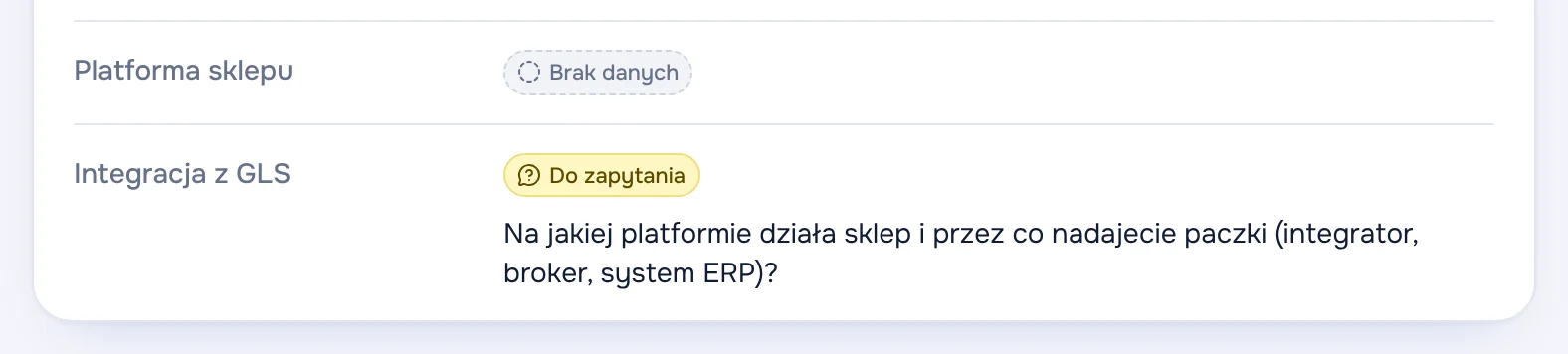
Turn gaps into questions for the call
Shipped
ContextShop websites often leave out what reps need first, such as the dispatch address.
The questionWhat should the brief show when a detail is missing?
Not chosen · A · The best guess. Shown like a fact, it is the kind of answer reps had to correct with customers.
Not chosen · B · “No data”, and stop. Honest, but a dead end.
Chosen · C · A question for the call. “Ask the customer”, with the question ready to use.
Why I chose itA question gives the rep something to do with the gap. A guess shown as a fact is the kind of answer reps had to correct with customers.
Trade-off
The rep spends part of the first call on what the tool couldn’t find.
My role
I set the rule: a missing detail becomes a question, never a guess.
One missing detail, three ways to handle it
A · Fill the gap with the best guess
Dispatch addressKrakówA guess from the returns address, shown like a fact
B · Show “No data” and stop
Dispatch addressNo dataHonest, but a dead end
C · Ask the customer
Dispatch address“Where do you ship your parcels from?”Ask the customer
Shipped
Above, lo-fi sketches of the options. Below, the shipped screen; the shop is fictional.
Two tools from version 1, rebuilt around the brief
Each one had hit a barrier in version 1.
01 · Lead finder
Find a lead
Reps filter shops by industry, region and shop platform. Each match links to its source, so a rep can check what the shop sells and how it delivers. In the first version, this data wasn’t reliable enough for outreach.
Filters reps already think in
A source on each match
From the app. The shops are fictional.
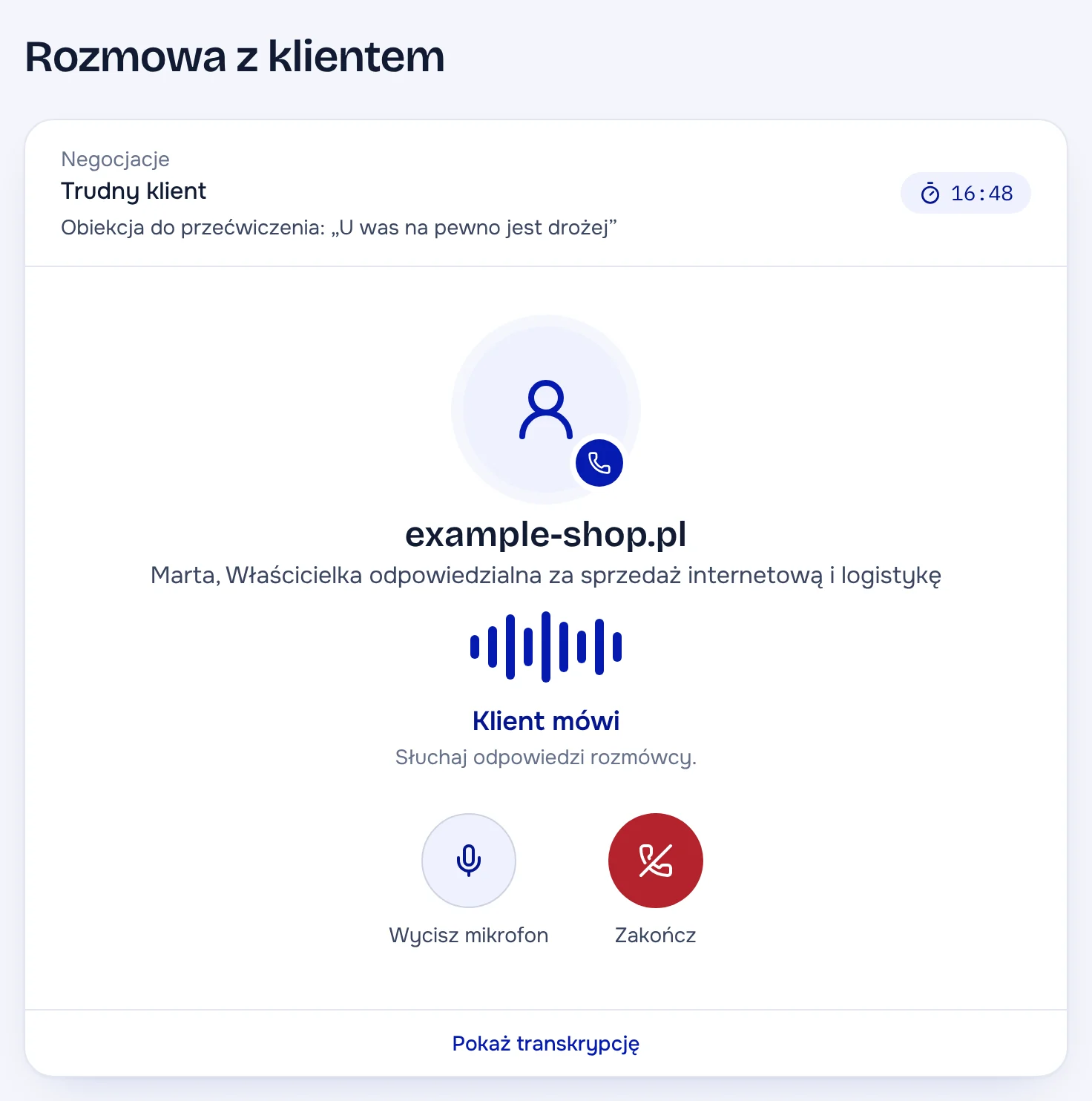
02 · Practice
Practise with this lead
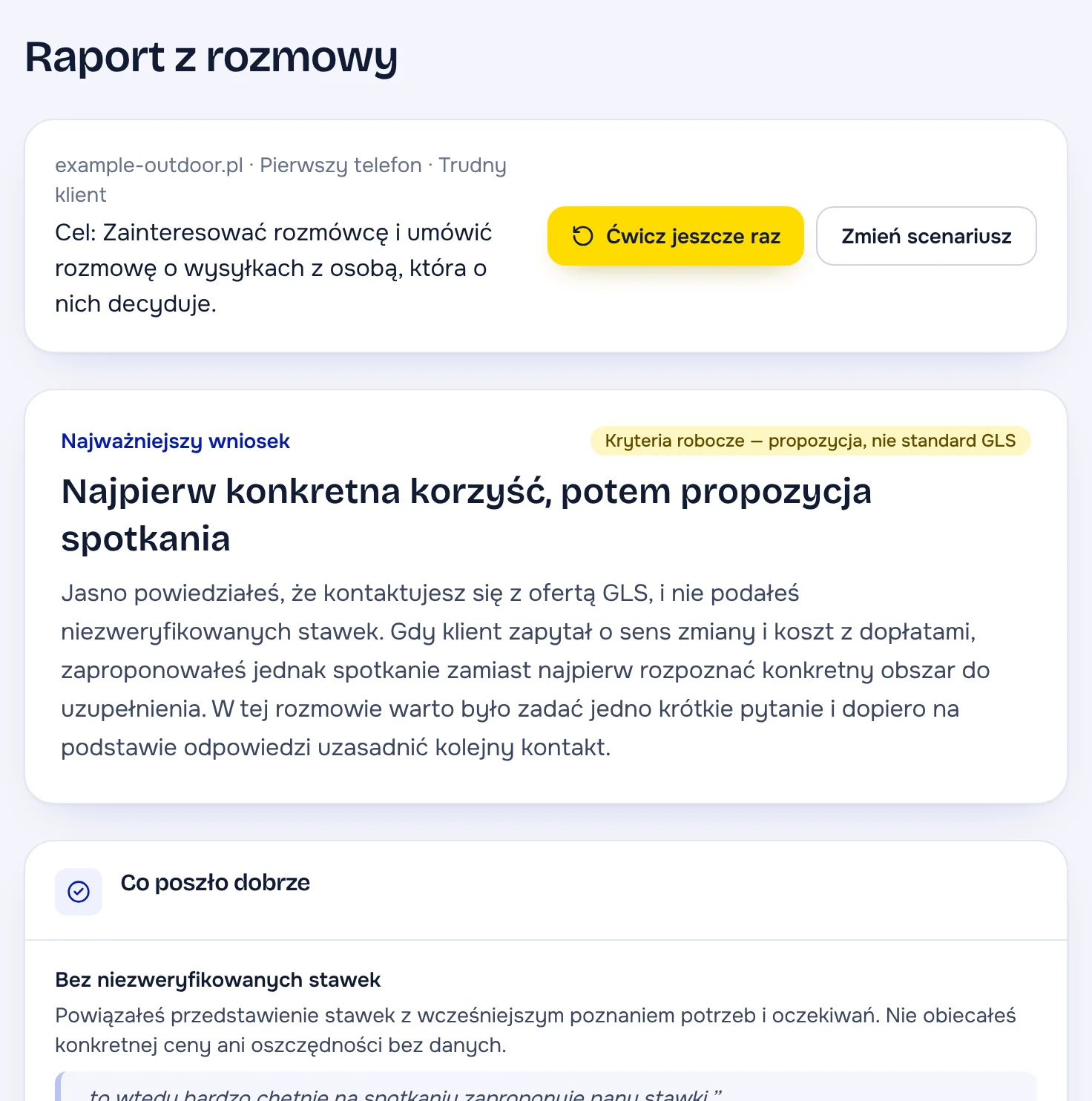
A voice role-play built from the shop’s brief, with fictional details labelled. Afterwards the rep gets a short report with their own words and one question to try next time. In the first version, reps rehearsed invented scenarios that felt unlike their real calls.
Built from the real brief
Fictional details labelled
A call and its report, from the app. The shop is fictional.
How I built it
Front end, back end and tests
I built the front end and the back end on the services below. To test the analysis, I ran the same shops many times and counted how often the key fields matched.
Supabase
Microsoft 365
OpenAI API
Tavily
Firecrawl
ElevenLabs
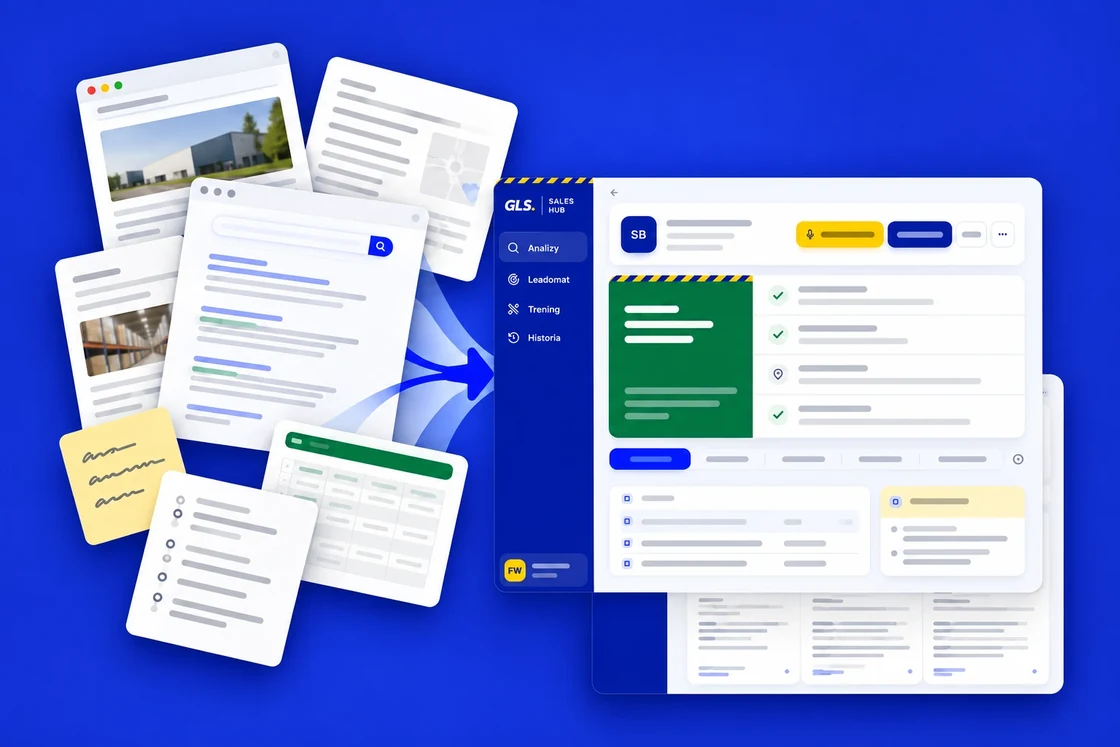
Every analysis runs the same seven steps, and every quote is checked against a saved copy of its page.
69% → 98–100%key fields matching across repeated runs
≈7× cheaper, 2× fasterthan the first analysis
≈$0.04per lead qualification
05 Testing
Ten reps,one month
In October 2026, 10 reps used the rebuild for a month, with usability tests. Two changes came out of it.
Pilot · October 2026
Not every lead needs everything
Reps didn’t use all the information at first, and waiting for the full analysis added load. The brief now starts small.
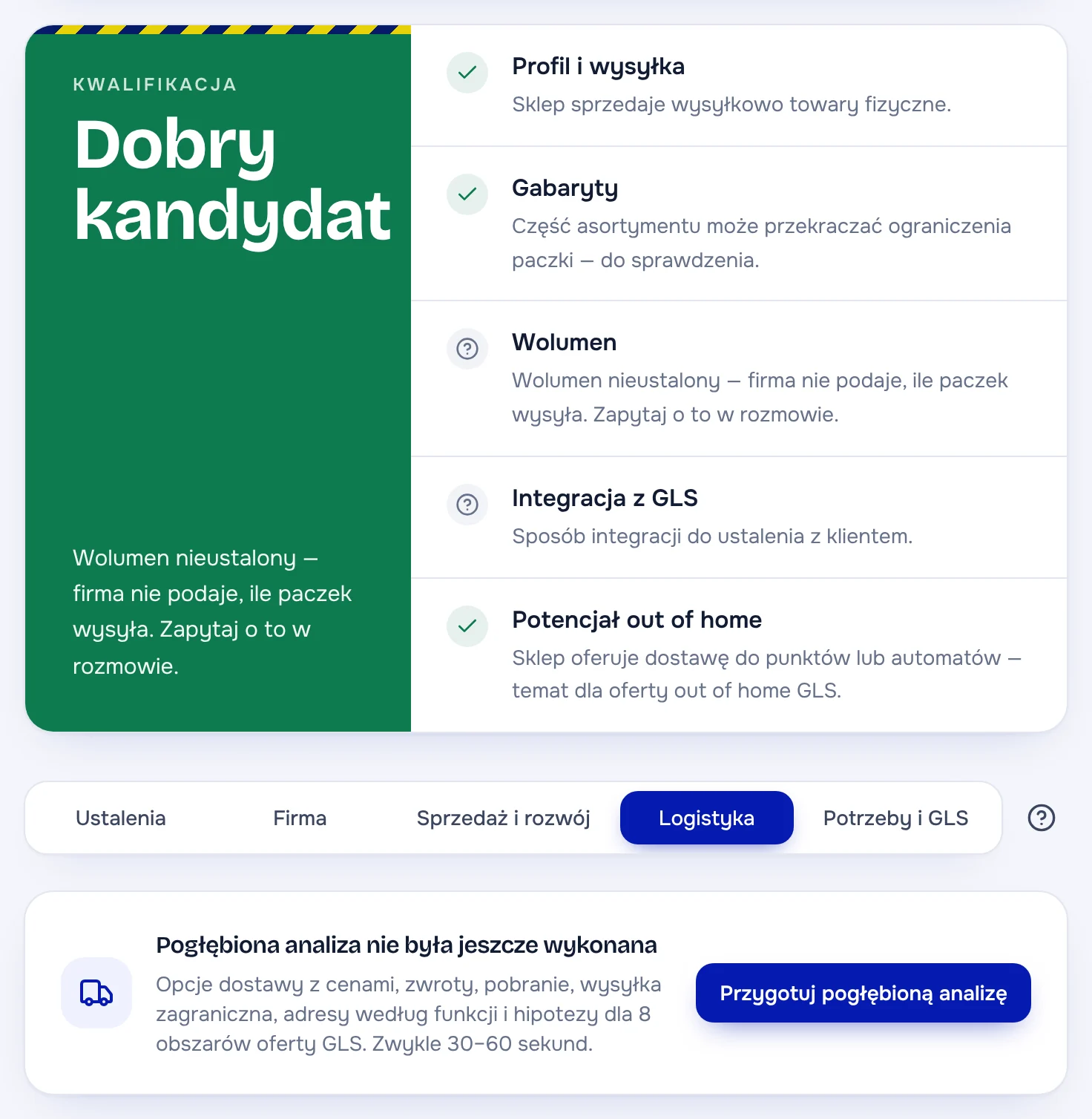
A green “Good candidate” verdict on a lead could appear even when the shop’s volume was unknown. Next time the verdict would carry an evidence label, as each finding does.
I’m looking for a product design role where I can work directly with users and help the team decide what to build next. I’m based in Poznań and open to remote work, hybrid roles or relocation.
 Lead finder
 Practice calls
 AI assistant